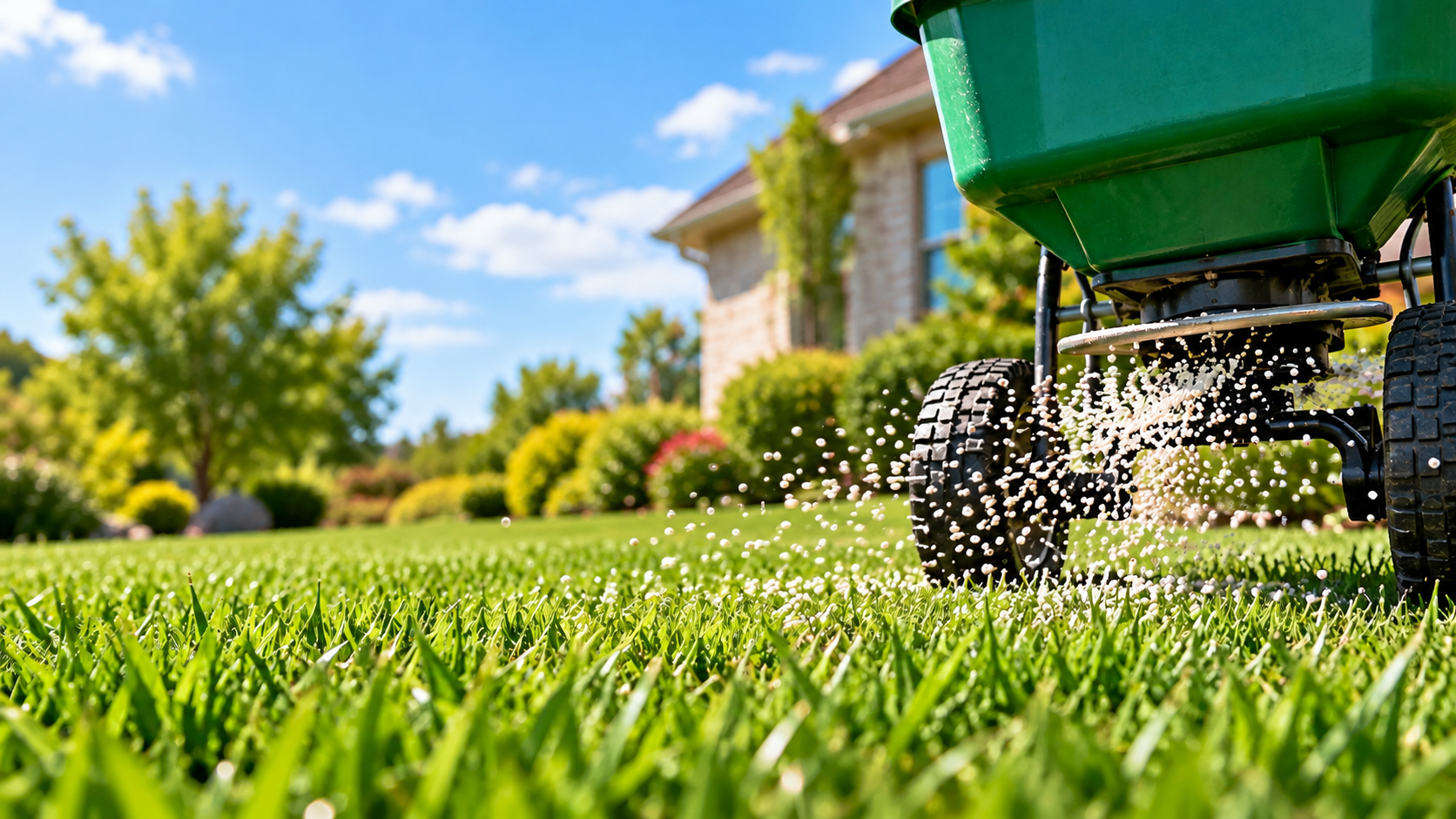
Bermuda grass is a popular choice for North Texas lawns because it thrives in sunny conditions and can create a thick, green lawn with proper care. However, getting the lush, healthy grass you want requires more than regular mowing and watering. Choosing the right fertilizer can help Bermuda grass grow thicker, recover from stress, and maintain its color throughout the growing season.
So, what is the best fertilizer for Bermuda grass? The best fertilizer depends on your soil’s nutrient levels, your lawn’s condition, and how much growth you want to encourage. For most homeowners, a nitrogen-based fertilizer selected according to a soil test is a good starting point.
Here’s what you need to know about choosing fertilizer, when to apply it, and how to maintain a healthy Bermuda lawn in North Texas.
What Nutrients Does Bermuda Grass Need?
Like other turfgrasses, Bermuda grass needs several nutrients to grow. The three primary nutrients listed on fertilizer labels are nitrogen, phosphorus, and potassium.
Understanding what each nutrient does can help you choose the right product for your lawn.
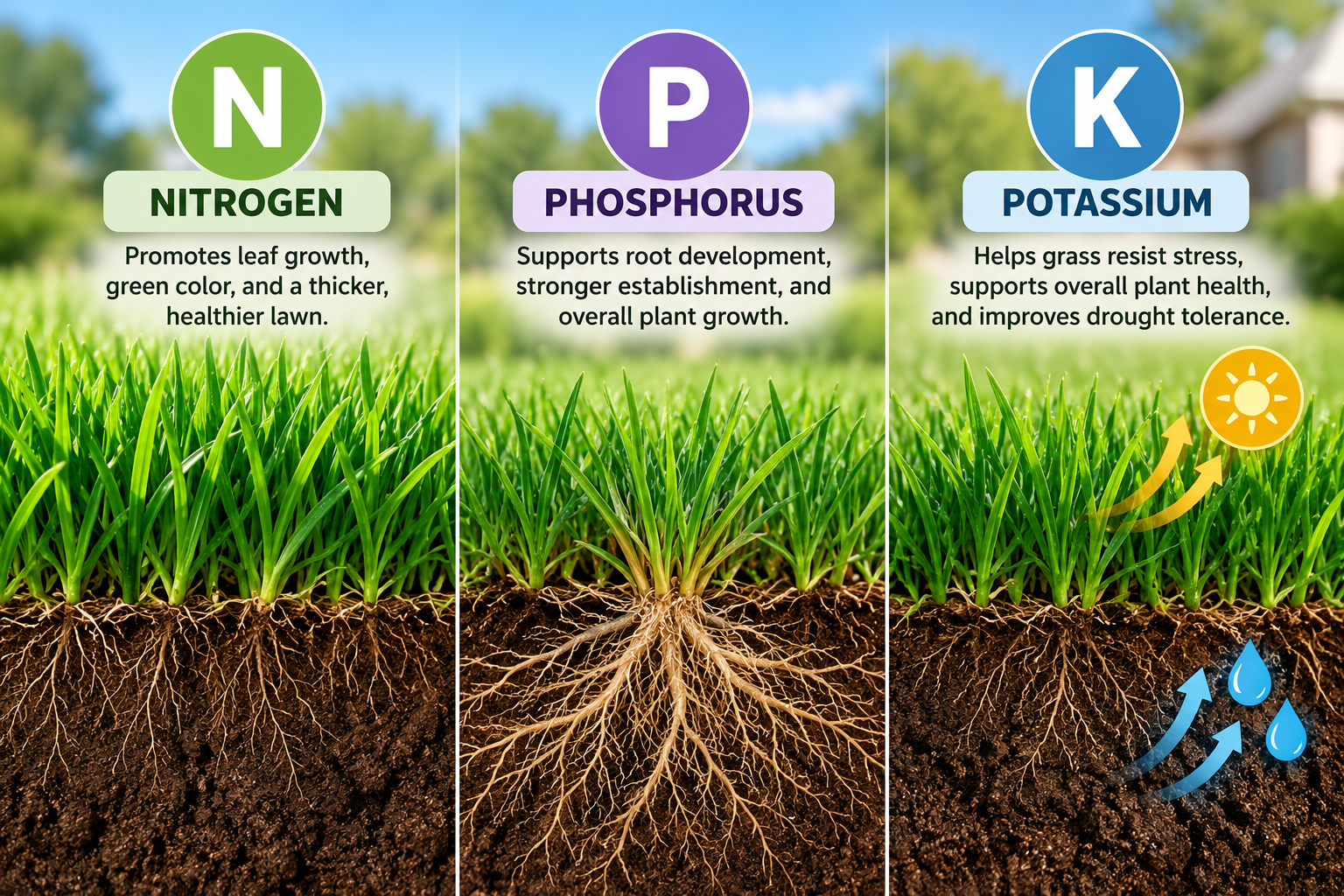
Nitrogen: Encourages Green, Healthy Growth
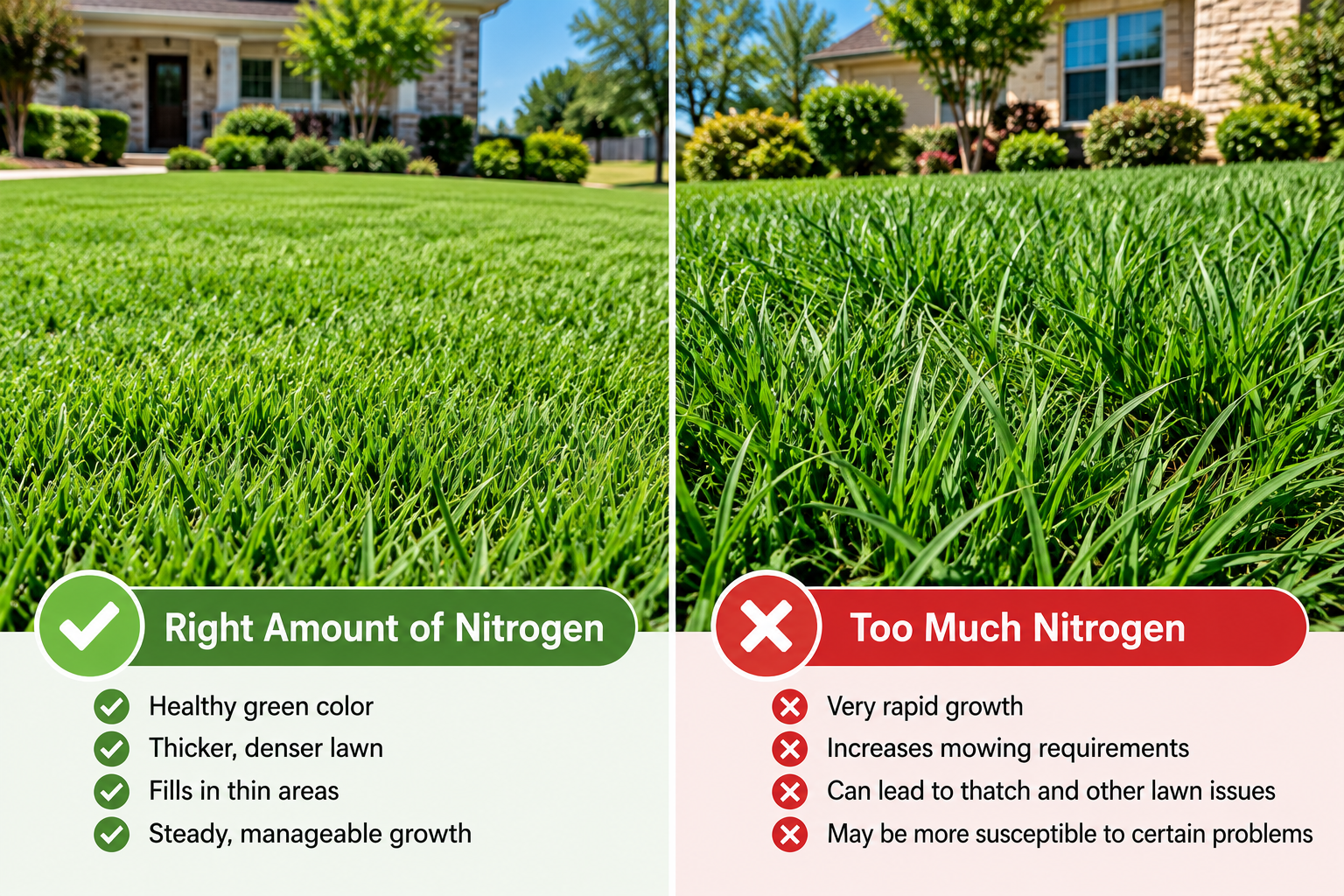
Nitrogen is particularly important for Bermuda grass because it supports leaf growth, green color, and lawn density. Proper nitrogen levels can help Bermuda grass fill in thin areas and develop a fuller appearance.
However, applying too much nitrogen can cause problems. Excessive fertilizer may encourage rapid growth, increase mowing requirements, and contribute to other lawn issues.
For North Texas homeowners, choosing a fertilizer with an appropriate nitrogen concentration and following the recommended application rate can help support healthy growth without overfeeding the lawn.
Phosphorus: Supports Root Development
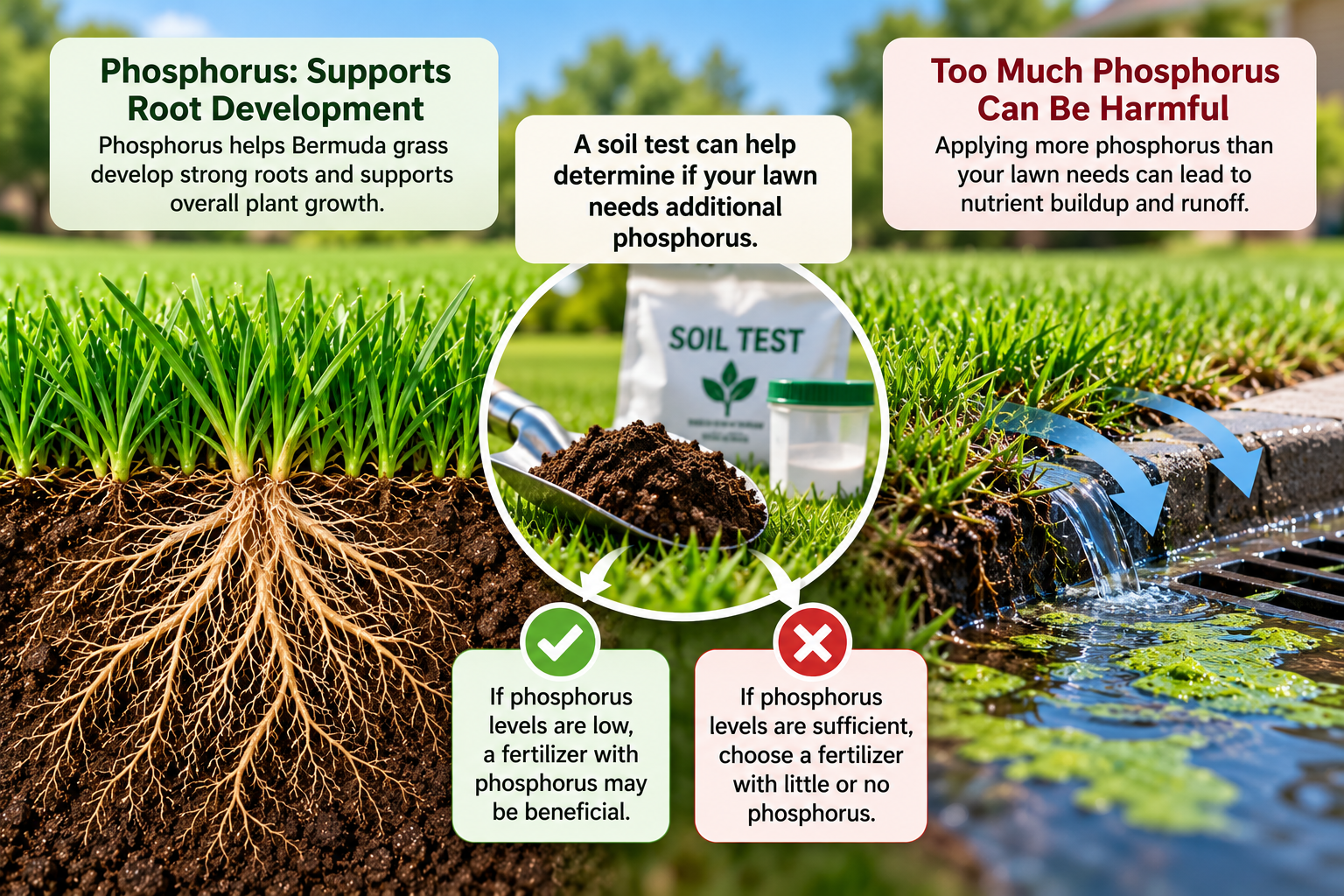
Phosphorus plays an important role in root development and plant growth. However, not every Bermuda lawn needs additional phosphorus.
Many soils already contain sufficient amounts. Applying more phosphorus than your lawn needs can contribute to nutrient buildup and runoff.
A soil test can help determine whether your lawn would benefit from a fertilizer containing phosphorus or whether you should choose a product with little or none.
Potassium: Supports Overall Plant Health
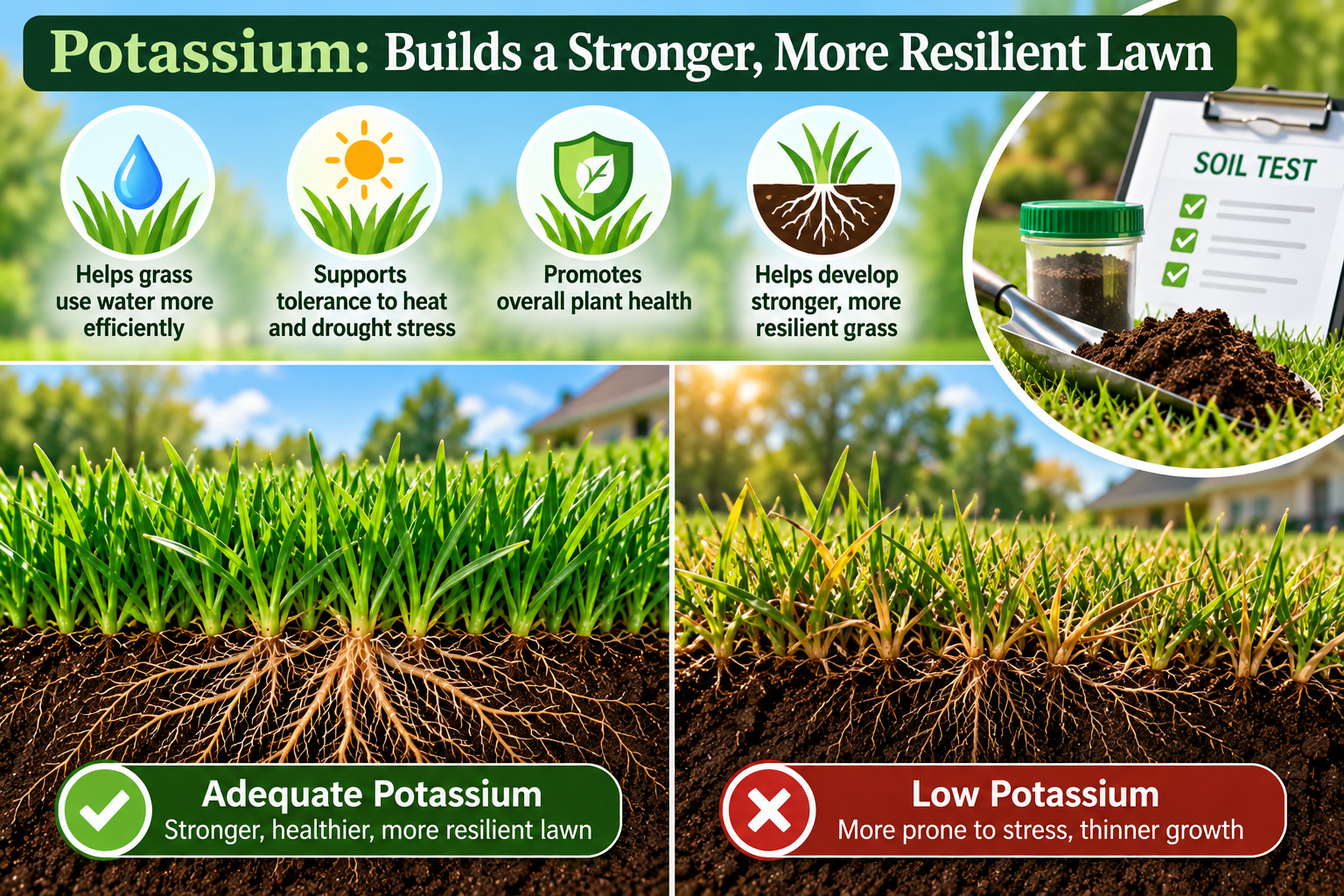
Potassium helps grass regulate water and supports several processes involved in plant health. Depending on your soil conditions, adequate potassium may help Bermuda grass handle environmental stress.
As with phosphorus, potassium should be applied according to your lawn’s needs rather than simply because it appears on a fertilizer label.
Soil testing is the most accurate way to determine which nutrients your lawn needs and how much fertilizer to apply.
What Is the Best Fertilizer Ratio for Bermuda Grass?
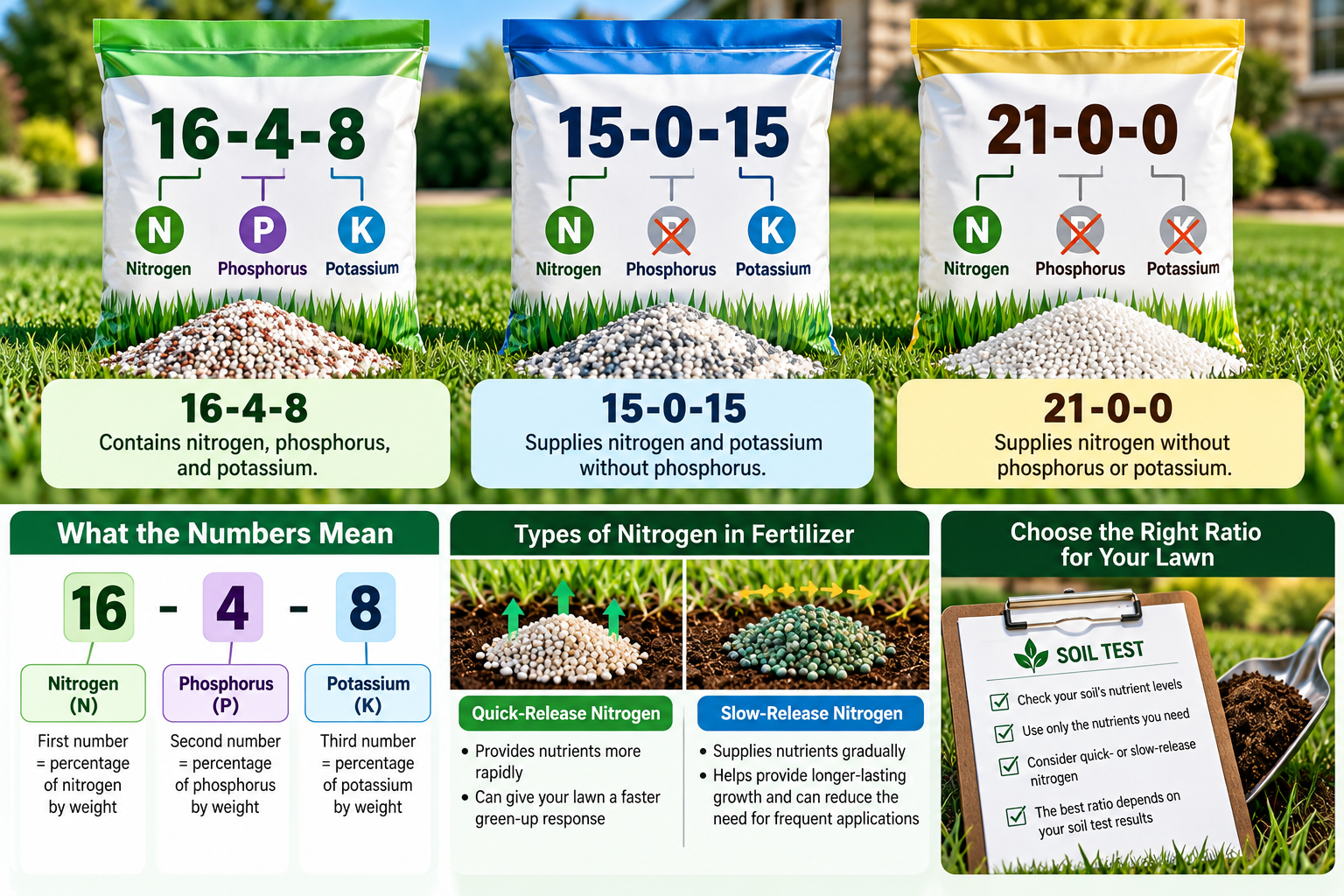
When shopping for lawn fertilizer, you’ll notice three numbers printed on the bag, such as 16-4-8 or 21-0-0. These numbers represent the percentages of nitrogen, phosphorus, and potassium by weight, respectively.
The best ratio for your Bermuda lawn depends on your soil test results.
Here are a few examples of fertilizer analyses you may encounter:
- 16-4-8: Contains nitrogen, phosphorus, and potassium.
- 15-0-15: Supplies nitrogen and potassium without phosphorus.
- 21-0-0: Supplies nitrogen without phosphorus or potassium.
These are examples of fertilizer analyses, not universal recommendations. The right choice depends on which nutrients your lawn actually needs.
For example, if your soil already contains sufficient phosphorus and potassium, a nitrogen-based fertilizer may be more appropriate than a product containing all three nutrients.
You should also consider whether the fertilizer contains quick-release nitrogen, slow-release nitrogen, or a combination of both.
Quick-release nitrogen provides nutrients more rapidly, while slow-release nitrogen supplies nutrients gradually. A fertilizer containing both can provide an initial growth response while continuing to supply nitrogen over time.
For many homeowners, a product containing some slow-release nitrogen is worth considering because it can help moderate growth between applications.
When Should You Fertilize Bermuda Grass in North Texas?
Timing is just as important as choosing the right fertilizer.
Bermuda grass is a warm-season grass that grows actively during warmer weather. Fertilizing when the grass is actively growing helps it use available nutrients more effectively. Learn more about when to fertilize bermuda grass.
Wait Until Spring Green-Up
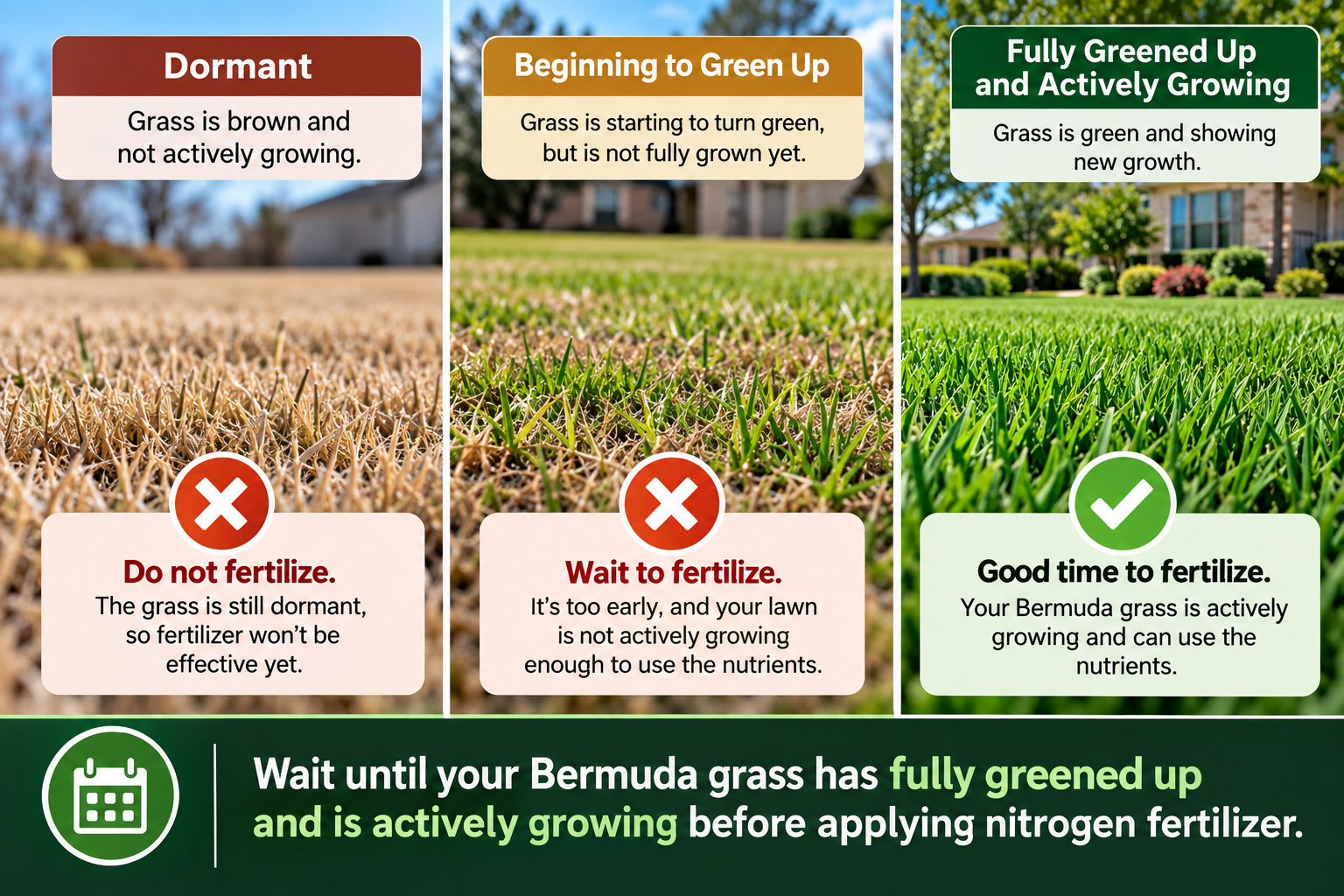
In North Texas, Bermuda grass typically begins greening up in the spring as temperatures rise. However, you shouldn’t fertilize simply because the calendar says spring has arrived.
Wait until your Bermuda grass has fully greened up and is actively growing before applying nitrogen fertilizer.
Fertilizing too early, while the grass is still dormant or only beginning to emerge from dormancy, is unlikely to provide the results you’re looking for.
Fertilize During the Growing Season
Once your Bermuda grass is actively growing, you can follow a fertilizer schedule based on your lawn’s condition, soil test results, and maintenance goals.
A Bermuda grass lawn in Texas generally requires fertilizer one to four times per year, with roughly 0.5 to 1 pound of nitrogen per 1,000 square feet during each application throughout the growing season. The exact amount and frequency will depend on the lawn’s individual needs and growing conditions.
Avoid automatically applying fertilizer every few weeks without considering how your lawn is responding. Established lawns may need less fertilizer than newer lawns or lawns maintained for especially high density and color.
Avoid Fertilizing Dormant Grass
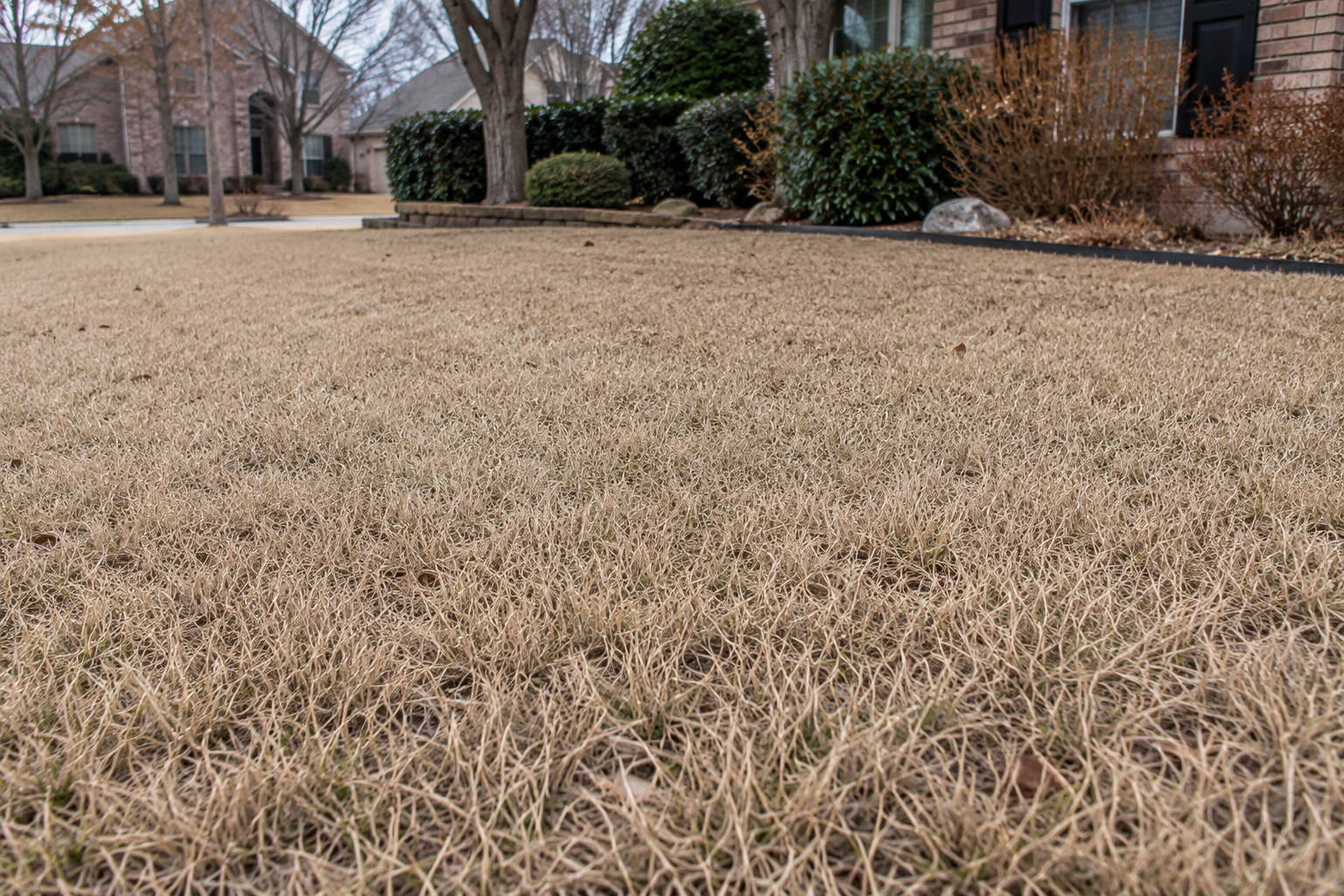
Bermuda grass naturally turns brown and becomes dormant during cooler weather. This doesn’t necessarily mean your lawn is unhealthy.
Avoid applying nitrogen fertilizer to dormant Bermuda grass. Instead, allow the grass to resume active growth in the spring before beginning your fertilizer program.
You should also avoid fertilizing during periods of severe heat or drought stress when your lawn cannot adequately use the nutrients.
How Much Fertilizer Should You Apply?
Applying the correct amount of fertilizer is essential for maintaining a healthy lawn.
Too little fertilizer may not provide enough nutrients to support the growth you want. Too much can encourage excessive growth and increase the risk of nutrient loss.
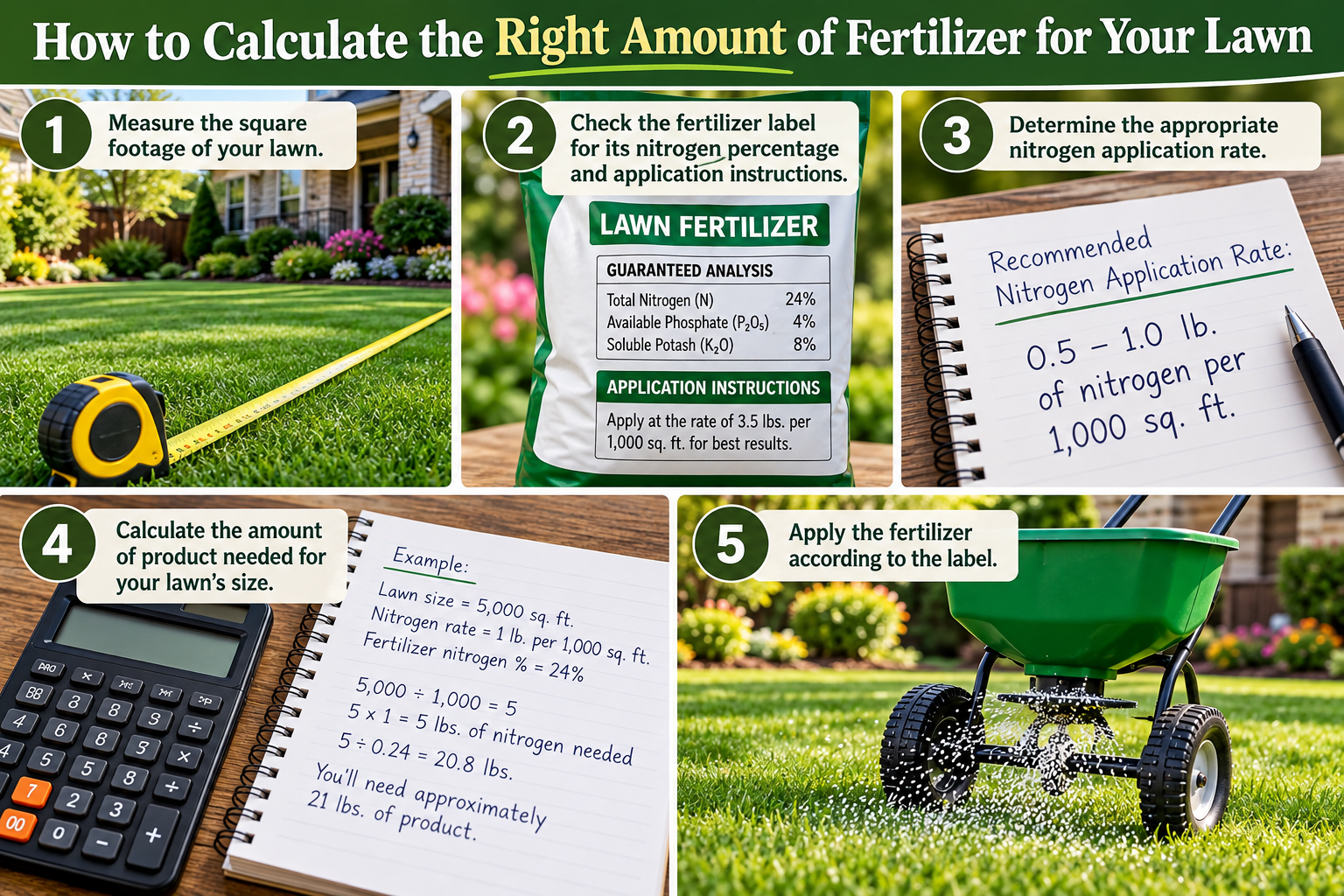
It is recommended to limit each fertilizer application to no more than 1 pound of nitrogen per 1,000 square feet of lawn.
However, remember that the amount of nitrogen is not the same as the amount of fertilizer product.
For example, a fertilizer containing 16% nitrogen provides 0.16 pounds of nitrogen for every pound of product applied.
To determine how much fertilizer your lawn needs:
- Measure the square footage of your lawn.
- Check the fertilizer label for its nitrogen percentage and application instructions.
- Determine the appropriate nitrogen application rate.
- Calculate the amount of product needed for your lawn’s size.
- Apply the fertilizer according to the label.
Always follow the product’s instructions, and avoid applying fertilizer immediately before heavy rainfall. If possible, lightly water the lawn after application when the label recommends it to help move the nutrients into the soil.
Signs Your Bermuda Grass May Need Fertilizer
Sometimes, your lawn’s appearance can indicate that it needs attention. However, discoloration and thin growth don’t automatically mean fertilizer is the answer.
Watch for these signs:
- Pale green or yellow grass: This may indicate a nutrient deficiency, but other problems can also cause discoloration.
- Slow growth during the growing season: Insufficient nutrients may contribute to slow growth, although watering, soil conditions, and other factors can also play a role.
- Thin or sparse areas: Bermuda grass may need appropriate nutrients to support growth, but compacted soil, shade, pests, and disease can also contribute to thinning.
- Poor recovery after mowing: If your lawn struggles to recover, check its overall growing conditions before assuming fertilizer is the solution.
If your Bermuda grass looks unhealthy, consider testing your soil before applying additional nutrients. A soil test can help identify deficiencies and prevent unnecessary fertilizer applications.
It’s also important to remember that fertilizer won’t fix every lawn problem. If your grass is struggling because of poor drainage, inadequate sunlight, improper watering, or pest damage, those issues need to be addressed as well.
Other Tips for Maintaining Healthy Bermuda Grass
Fertilizer is only one part of a successful lawn care routine. To help your Bermuda grass grow thick and healthy, combine proper fertilization with other essential maintenance practices.
Mow regularly. Bermuda grass benefits from consistent mowing at an appropriate height. Avoid removing too much of the grass blade at once, as excessive cutting can stress the lawn.
Water appropriately. Water deeply when needed rather than relying on frequent, shallow watering. Adjust your schedule based on rainfall, soil conditions, and the weather.
Address compacted soil. Soil compaction can interfere with water movement and root development. Aeration may help improve growing conditions when compaction is present.
Control weeds. A dense, healthy Bermuda lawn can help limit opportunities for weeds to establish. Use appropriate weed control methods when necessary, and follow all product label directions.
Monitor your lawn throughout the season. Look for changes in color, growth, and density. Identifying problems early can help you determine whether your lawn needs fertilizer or another type of care.
Combining these practices with an appropriate fertilizer program can help your Bermuda grass maintain its health and appearance throughout the growing season.
Get Help Maintaining Your North Texas Bermuda Lawn
Choosing the best fertilizer for Bermuda grass starts with understanding what your lawn needs. The right combination of nutrients, proper application timing, and consistent maintenance can help support a thicker, greener lawn.
However, every lawn is different. Soil conditions, weather, watering habits, and existing lawn problems can all influence how well Bermuda grass responds to fertilizer.
If you’re struggling with thin grass, persistent weeds, or uneven growth, professional lawn care can help you identify the underlying issues and develop a maintenance plan suited to your property.